Free Consultation630-668-4211



Free Consultation630-668-4211
Available 24/7
How Are High-Value Collections Divided in a Divorce?
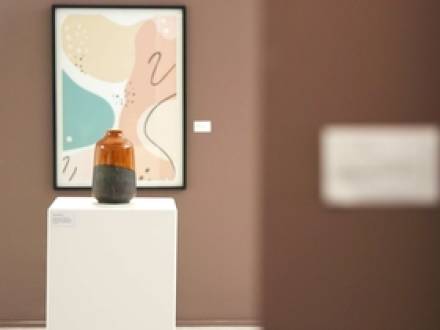 Collections of antiques, fine art, rare coins, sports cards, or historical memorabilia can be difficult to divide in a divorce. There are often strong emotions around them. They also require valuation before they can be divided. Some pieces may belong to only one spouse.
How a collection is divided usually depends on when each piece was acquired, how it was paid for, and what it's currently worth. A Barrington, IL asset division attorney can help you protect your share of a valuable collection in your 2026 divorce.
Is a Collection Considered Marital Property in an Illinois Divorce?
Illinois law presumes that anything either spouse acquired during the marriage is marital property, no matter who bought it (750 ILCS 5/503(b)(1)). A card collection one spouse built over 15 years of marriage with household income is likely marital property, even if the other spouse didn't purchase any part of it.
Pieces you owned before the wedding, or received as a gift or inheritance after the marriage, are non-marital property and stay with you. Any increase in their value usually stays non-marital as well.
Many collections may be a mix of both marital and non-marital property. If marital money was used to restore, store, or insure your non-marital pieces, the marital estate may have a claim for reimbursement. To prove an item is non-marital requires clear and convincing evidence. Old receipts, gift letters, estate paperwork, and dated photos can help document what is marital or not.
How Is a Collection Valued During an Illinois Divorce?
Illinois courts value property at fair market value. This is generally what a willing buyer would pay for it at the time of the trial unless the spouses agree to a different date or the judge picks one. For fast-moving markets, like graded sports cards or certain coins, the date can change the value of a collection a lot.
Spouses often hire appraisers who work with that specific type of item to help value collections. Condition, grading, and provenance (the documented history of who owned a piece) can all affect the final figure.
Be careful relying on an insurance appraisal. These often list replacement value, which can be different from what a piece would sell for.
How Do Illinois Courts Divide a Collection Between Spouses?
Illinois divides marital property in "just proportions," which doesn't always mean a 50/50 split. The court considers factors like each spouse's contribution to the property, the length of the marriage, and each spouse's economic situation. Since splitting a set can lower its value, courts and couples often look at other options, such as:
- One spouse keeps the whole collection, and the other receives assets of equal value, like more of a retirement account or home equity.
- The spouses divide the pieces themselves, possibly by taking turns choosing or by grouping items into lots of similar value.
- The collection is sold, and the proceeds are divided.
Sales of collections can sometimes reduce their final value. Auction fees and dealer markups can cut into proceeds, and the IRS can tax gains on collectibles at a higher rate than gains on most stocks.
What if Your Spouse Sells or Hides Part of a Collection During an Illinois Divorce?
Collectibles are small and easier to sell privately than many assets. If you're worried about this, photograph each item. Keep a list of grading certificates, serial numbers, and purchase records. Your attorney may be able to ask the court for an order barring either spouse from selling marital property while the case is open.
If a spouse gives away marital pieces or sells them and uses the proceeds for purposes unrelated to the marriage after it began breaking down, a court may treat it as dissipation. The court can then charge the lost value against that spouse's share of the marital estate.
Dissipation claims have strict notice deadlines, so raise your concerns with your attorney early.
Call a Wheaton, IL Asset Division Attorney Today
Collectibles can be very valuable, but are also more complicated than many assets. Our Barrington, IL divorce lawyers can help you ensure a fair division.
Roberts PC works hard to settle cases out of court and keep costs down, but we're prepared to go to trial when an agreement isn't possible. We regularly handle larger cases for business owners, professionals, doctors, lawyers, and judges. Every client also gets Attorney Chuck Roberts' personal cell phone number and email address.
Call Roberts PC at 630-668-4211 to schedule your free consultation.

Office
400 S. Knoll St., Suite A
Wheaton, IL 60187
Phone
630-668-4211
From our office in Wheaton, Illinois, we serve clients throughout the DuPage County area, including but not limited to Naperville, Lisle, Glen Ellyn, Winfield, Oak Brook, Hinsdale, Wayne, Burr Ridge, Western Springs, Downers Grove, Barrington, and Schaumburg.
Results listed are not a guarantee or indication of future case results.
©2026 Roberts PC

